


First Look: 2027 Beta RR X-Pro range
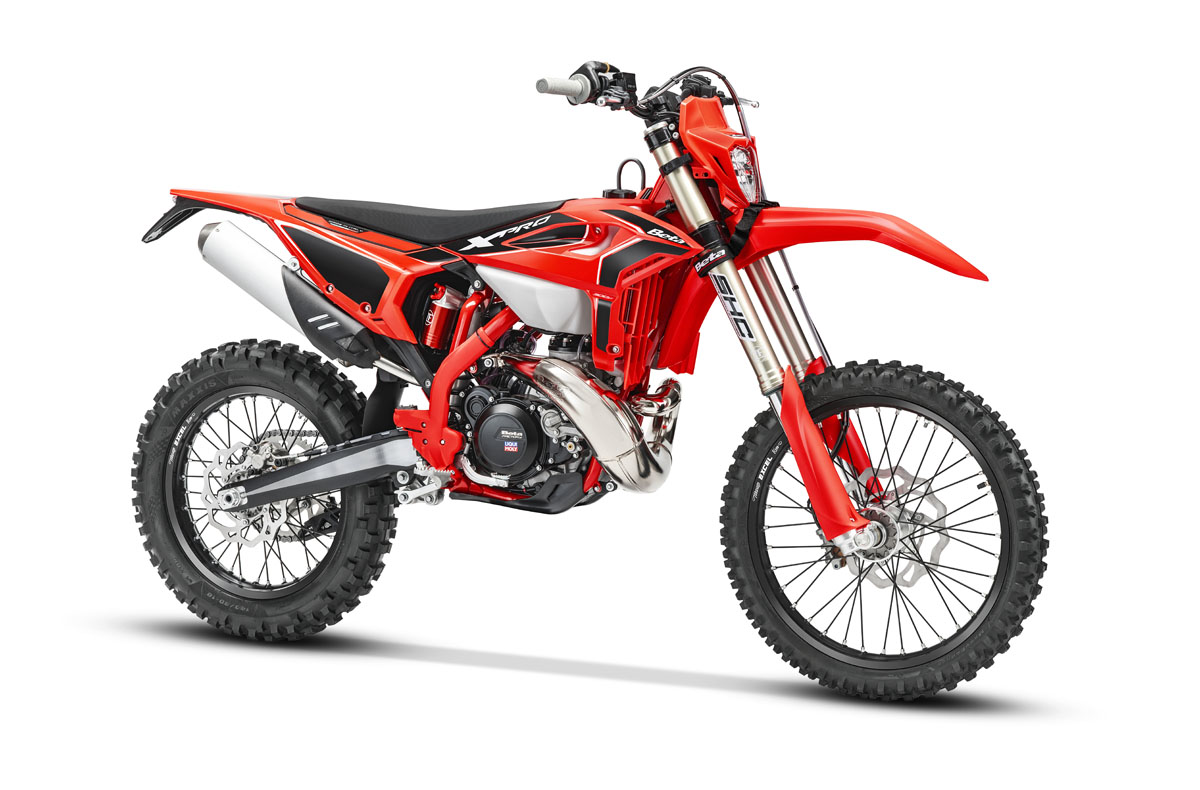
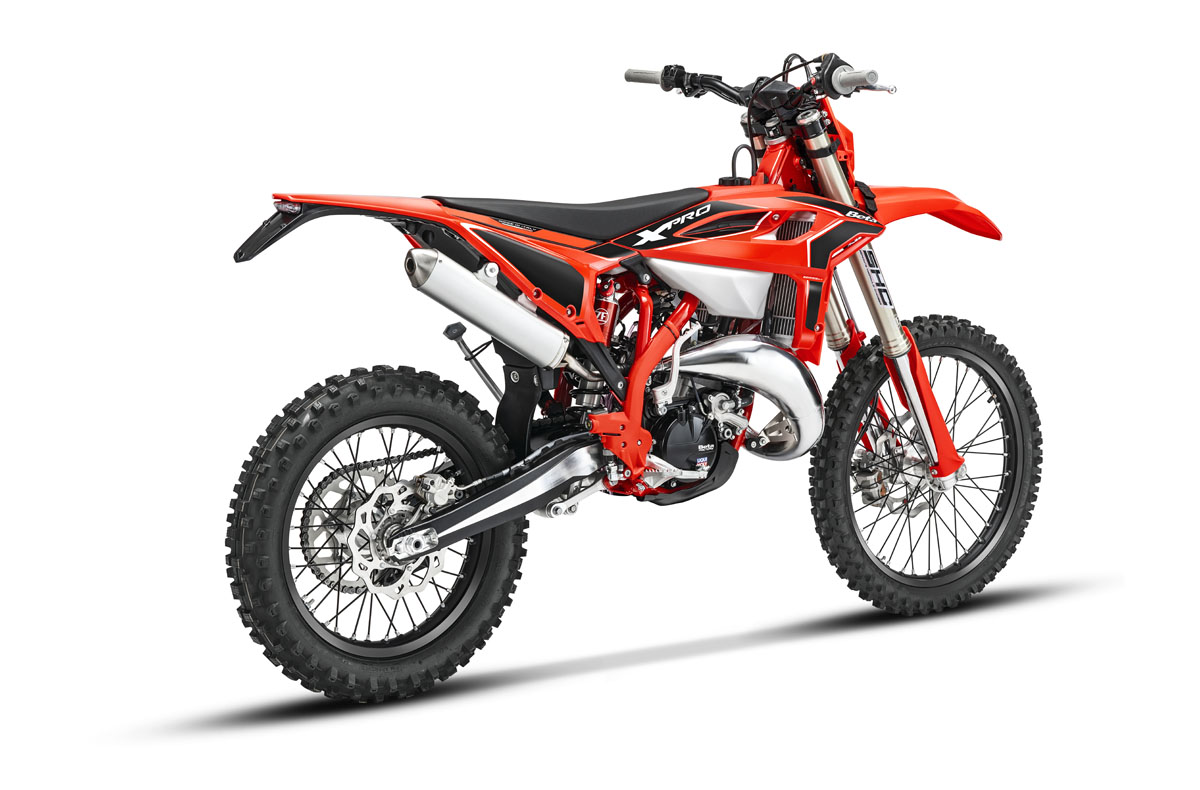
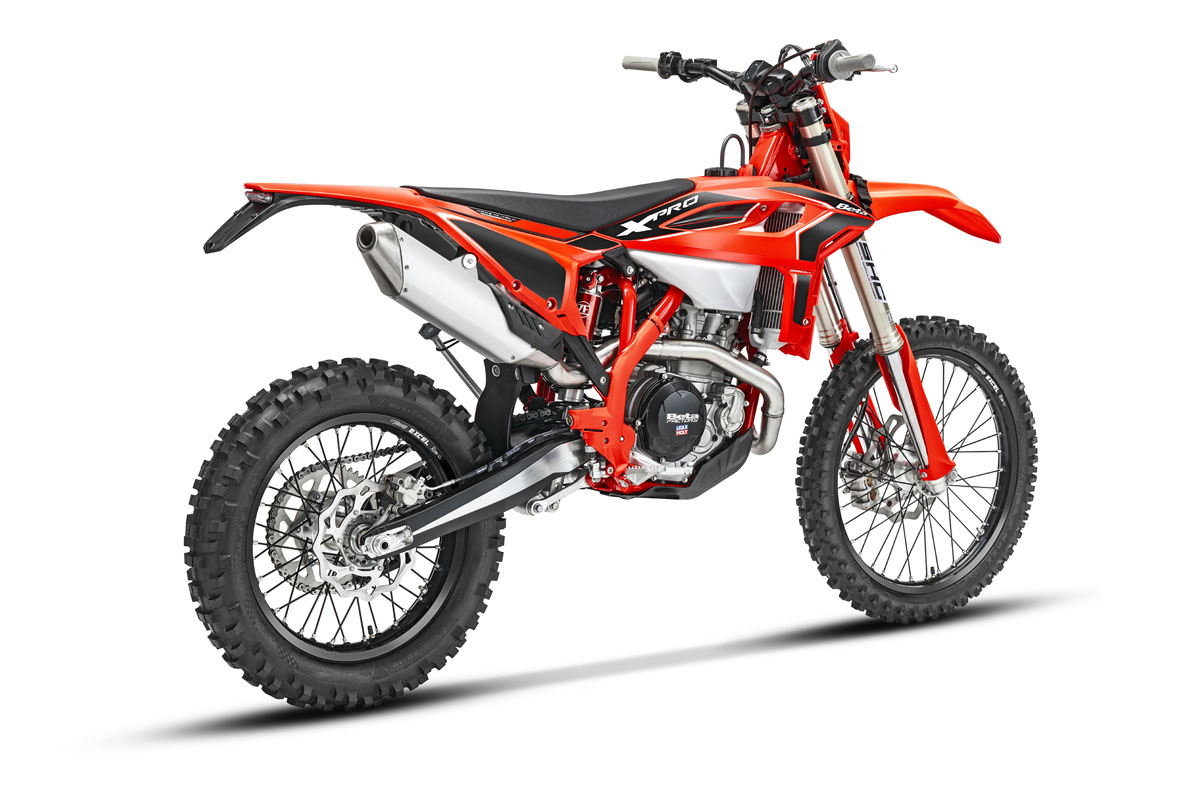
Beta has updated its 2027 RR X-Pro range, the family that sits right in the middle of its enduro line-up: more complete and capable than the Xtrainer, but less extreme than the RR Race models. In simple terms, the X-Pro remains the Beta for riders who want a serious, comfortable, adjustable and do-it-all enduro bike without jumping straight to the most racing-focused version.
The structure of the range remains unchanged, with eight models split between four two-strokes and four four-strokes. There is no major rethink of the concept, but there is a fairly complete update in the areas that matter most: more electronics on the four-strokes, internal engine changes on the two-strokes, revised suspension settings, a new LED headlight, an updated dashboard and several smaller changes aimed at improving reliability, feel and comfort.
Beyond the “Ride like an X-Pro” slogan, the interesting point is that Beta continues to refine a range created to fill a very specific gap: bikes that are easier, lower and more comfortable than the Race models, but with enough chassis, engine and equipment to work well in classic enduro, technical riding and hard enduro.
The X-Pro still sits in the middle – and that is exactly the point
Within Beta’s enduro catalogue, the X-Pro keeps its place. The Xtrainer remains the most accessible, friendly and fun-focused option. At the other end are the RR Race models, with a more competition-driven approach and higher-spec suspension.
Between the two, the X-Pro aims to combine confidence, ease of use and a serious technical base for more experienced riders.
That remains its strongest argument: versatility. It does not try to be the most radical bike in the family, nor the easiest. Instead, it is designed to adapt to a wide range of riders and terrain. For 2027, Beta has not changed the recipe. It has refined it.
The biggest news is on the 4S models: Launch Control & Quick Shift
The main update on the 2027 X-Pro range comes on the four-stroke models. For the first time in this family, Beta adds two electronic systems inherited from racing: Launch Control and Quick Shift.
Launch Control offers five levels of adjustment and is designed to manage torque delivery off the start, helping to improve traction and reduce losses caused by wheelies or poor grip. It is not something the average rider will use every Sunday on a trail ride with friends, but it makes sense for those who race or occasionally ride motocross tracks.
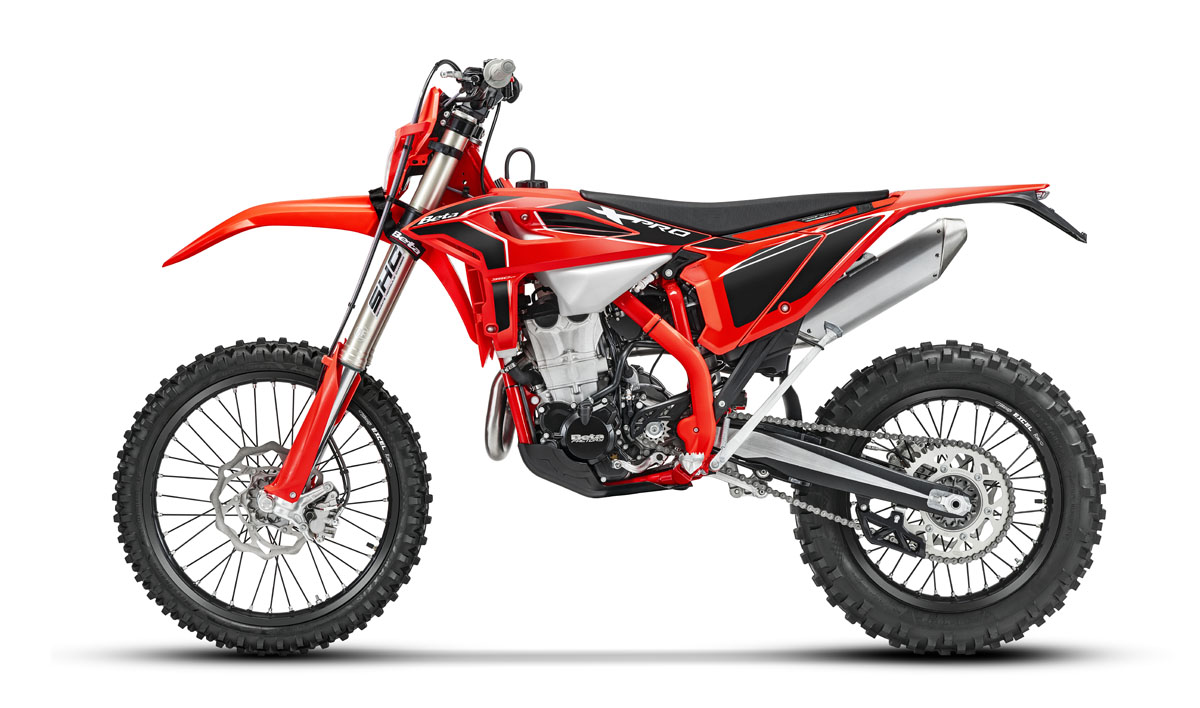
Quick Shift allows riders to upshift without closing the throttle. It is another racing-style feature, not essential for everyone, but enough to move the X-Pro 4-stroke models a step forward in electronics compared with what they offered before.
Both systems are added to the existing two-level traction control and two-map engine selector. To bring everything together, Beta has also redesigned the handlebar switchgear, which remains in a protected position close to the bars.
More electrical reliability and internal updates for the 4S engines
The four-strokes also receive a new voltage regulator, designed to provide more stable voltage to the battery and the rest of the electrical components. It may sound like a small detail, but on bikes with increasing levels of electronics, these improvements matter more than they might appear.
Beta has also updated the titanium valves, now with a revised finish to improve durability and reliability. A new timing chain tensioner is also fitted, changing from a combined mechanical/hydraulic system to a fully mechanical design.
According to Beta, this reduces friction, improves engine smoothness and helps starting, both when cold and hot.
These are not headline-grabbing updates, but they are the kind of changes aimed at making the bike more consistent and reliable over time.
Fine-tuning for the two-strokes
On the two-strokes, Beta has focused its work on improving feel, smoothness and reliability.
The RR X-Pro 250 and 300 two-strokes models receive new main bearings to reduce internal friction and improve engine rotation smoothness. In real riding terms, that should mean a more direct response, a better sense of drive and an engine that feels a little freer and fuller throughout the rev range.
The 125 2-strokes gets an updated piston, developed to improve operation, overall quality and durability. In a small-capacity engine where every change is noticeable, this update could have more effect than it might first seem.
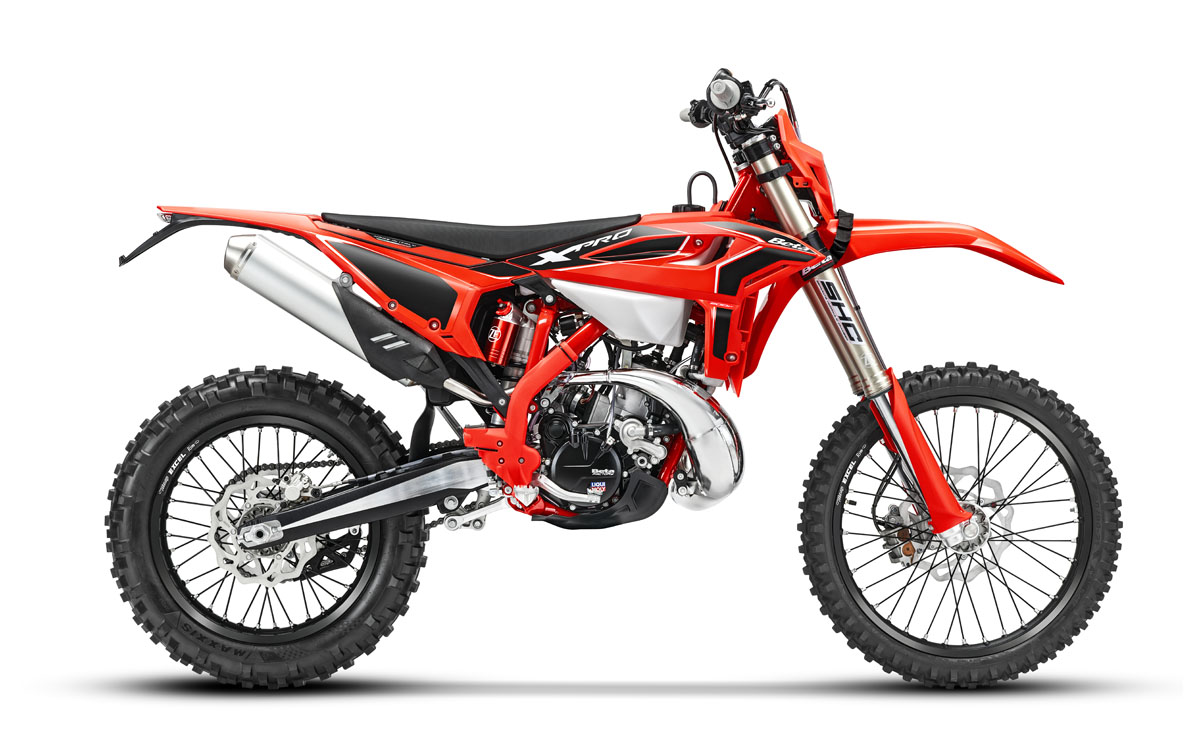
The RR X-Pro 200 2-strokes inherits a primary transmission update from the Race version, with longer internal gearing designed to better distribute loads and increase mechanical strength. To keep the final riding feel in line with the previous model, Beta compensates with a shorter secondary ratio.
In other words: inside, it changes; from the rider’s point of view, it should still feel familiar.
Suspension: same philosophy, more adjustment range
One of the defining features of the X-Pro is its chassis and suspension package. Beta keeps the idea of a bike that is slightly lower and more comfortable than an RR Race, with a 930mm seat height — 20mm lower than the Race version.
That remains an important advantage for riders looking for more control in technical sections or a bike that is less physically demanding.
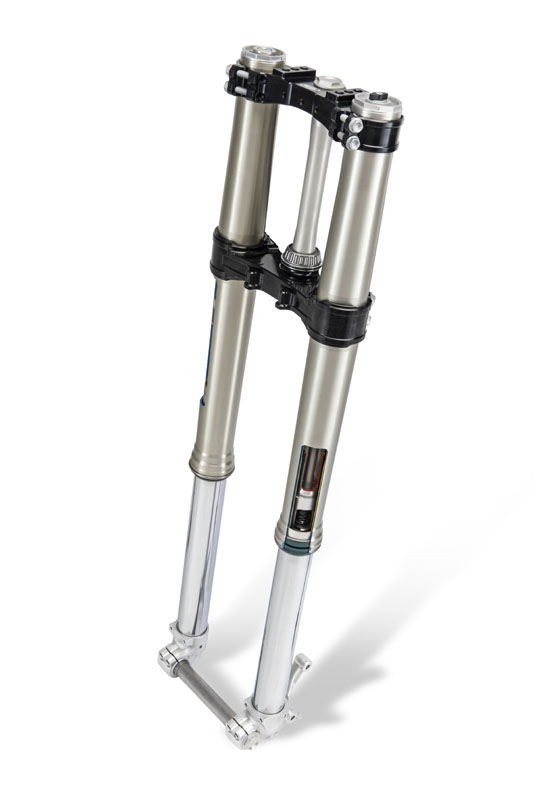
The SHC — Separate Hydraulic Chamber — front fork keeps its asymmetrical design: one leg handles the spring, the other the damping. The idea is to save weight and improve adjustability.
For 2027, Beta has revised the settings to improve comfort and absorption, especially in the first part of the stroke.
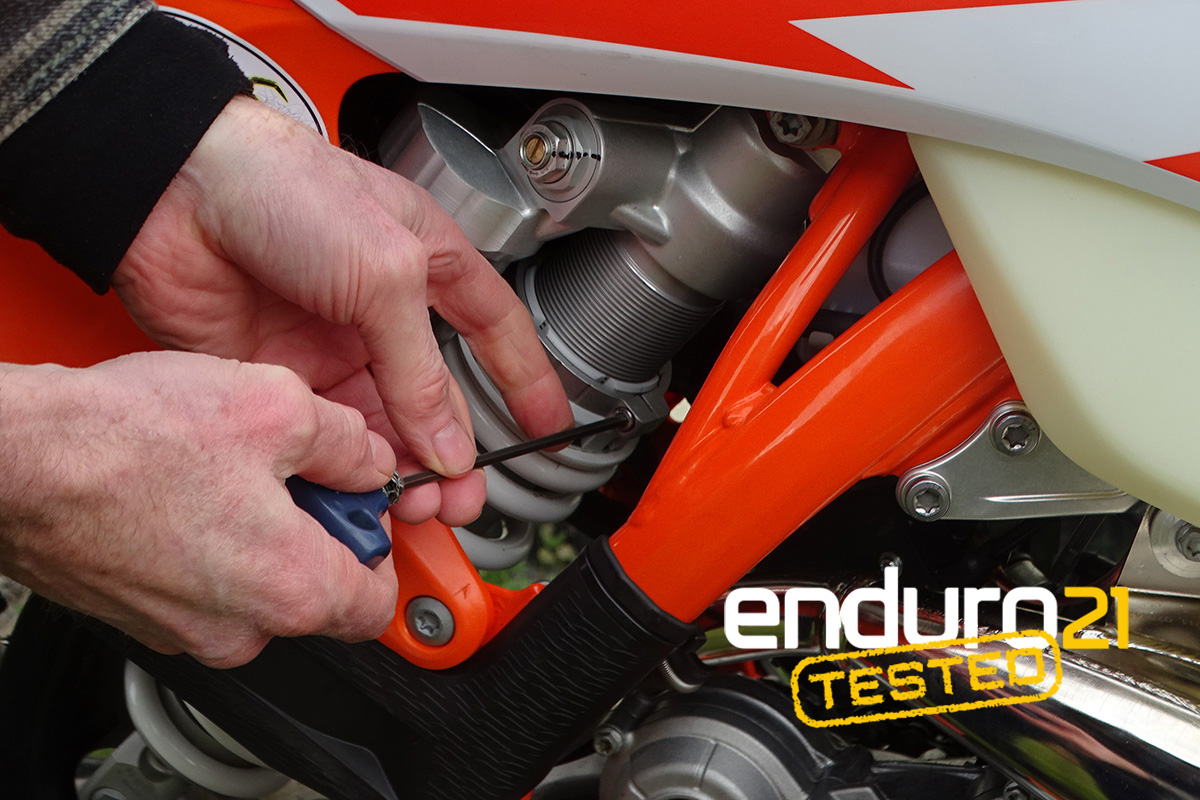
At the rear, the shock also receives internal updates. Beta talks about a clearer separation between high- and low-speed operation, now adjustable externally without tools.
In practice, that should make setup easier and broaden the bike’s working range, from relaxed trail rides to racing or hard enduro.
New details across the whole range
Beyond the engines and suspension, all 2027 X-Pro models share a series of updates that modernise the range without changing its base.
New softer-compound grips are fitted, designed to reduce vibration and fatigue on longer days. There is also a new Trailtech dashboard, larger, easier to read and stronger than before, paired with an updated wheel-speed sensor.
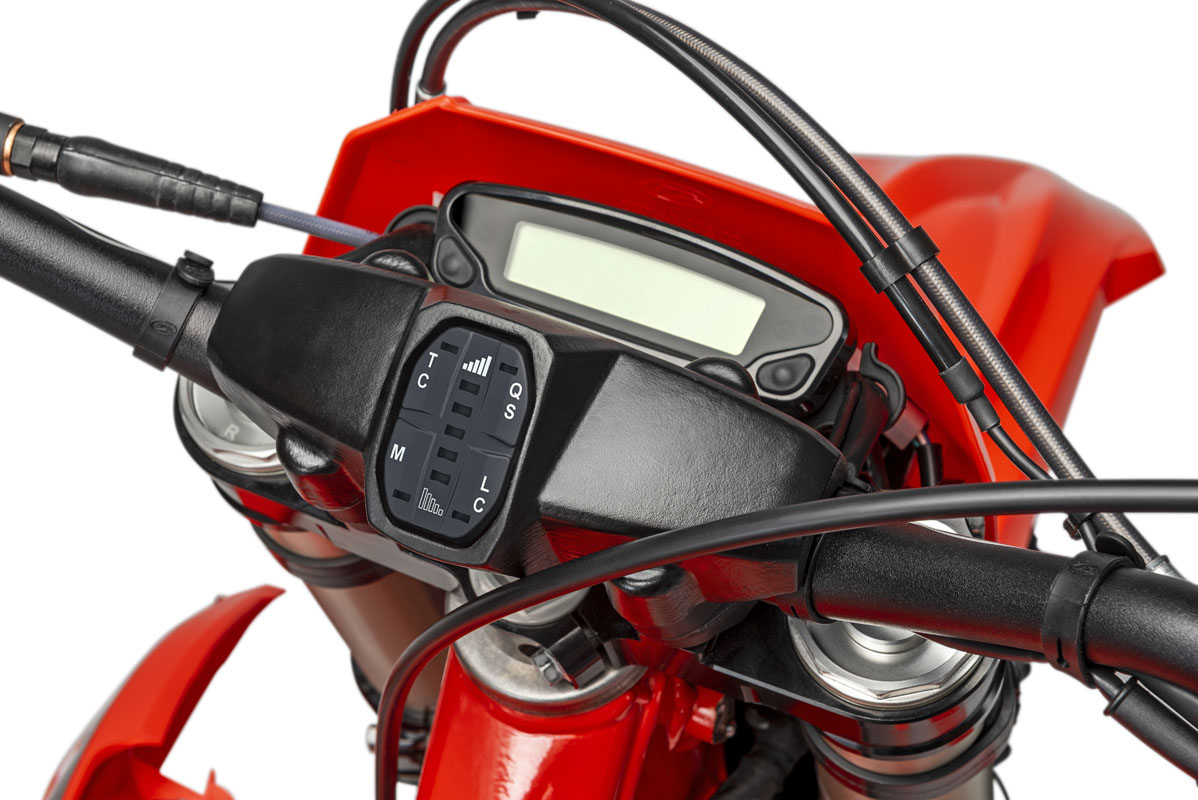
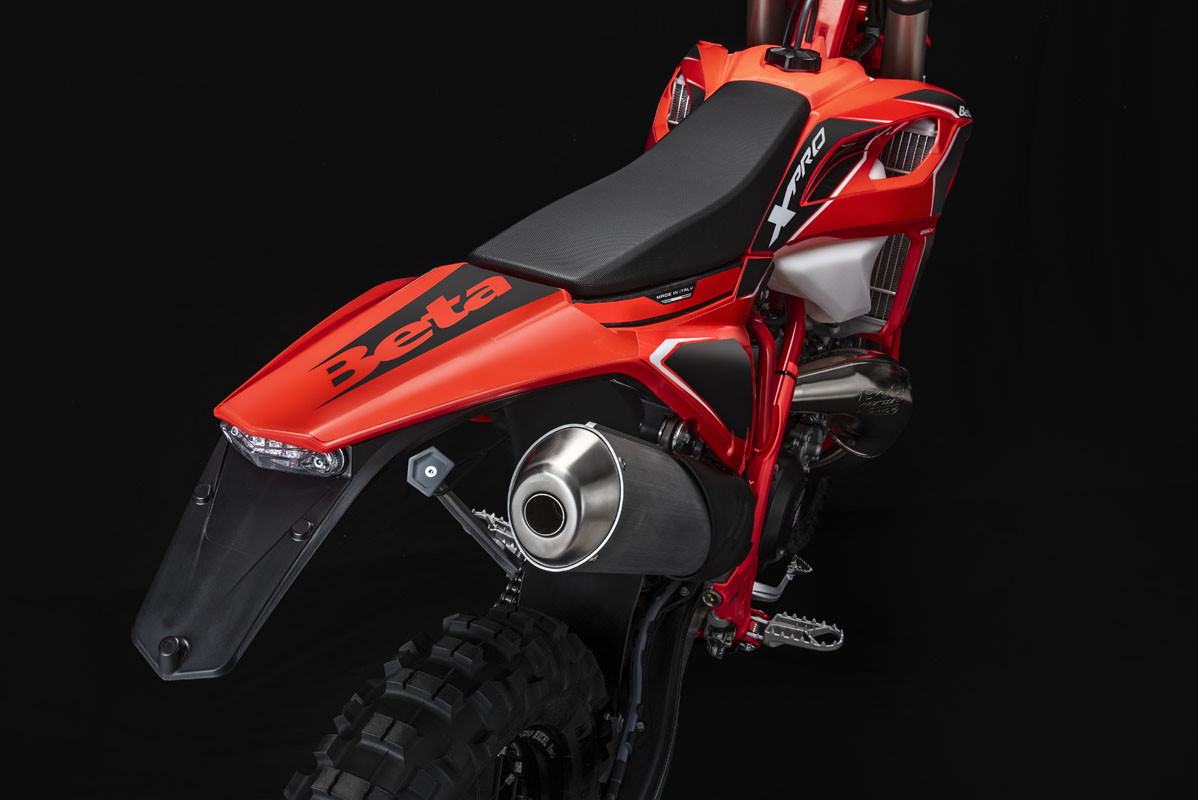
The front end changes with a new mask and latest-generation LED headlight, offering more power with lower energy consumption. It is one of those details that modernises the look of the bike and also adds something useful when the day goes longer than planned.
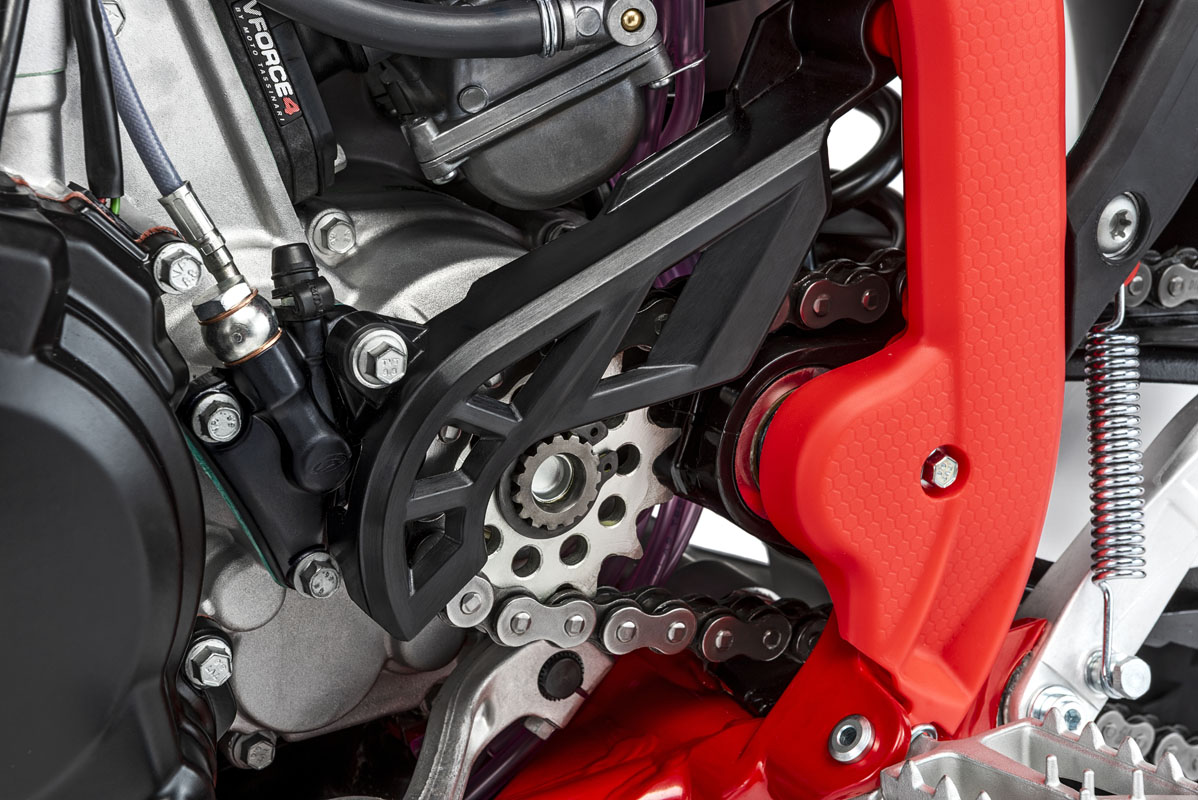
The front sprocket guard has also been redesigned, with more coverage and improved resistance.
Familiar parts remain, including the frame with an oversized main beam, handlebar mounts with rubber dampers, front pull strap, Nissin brakes, reinforced radiators and the expansion tank integrated into the frame.
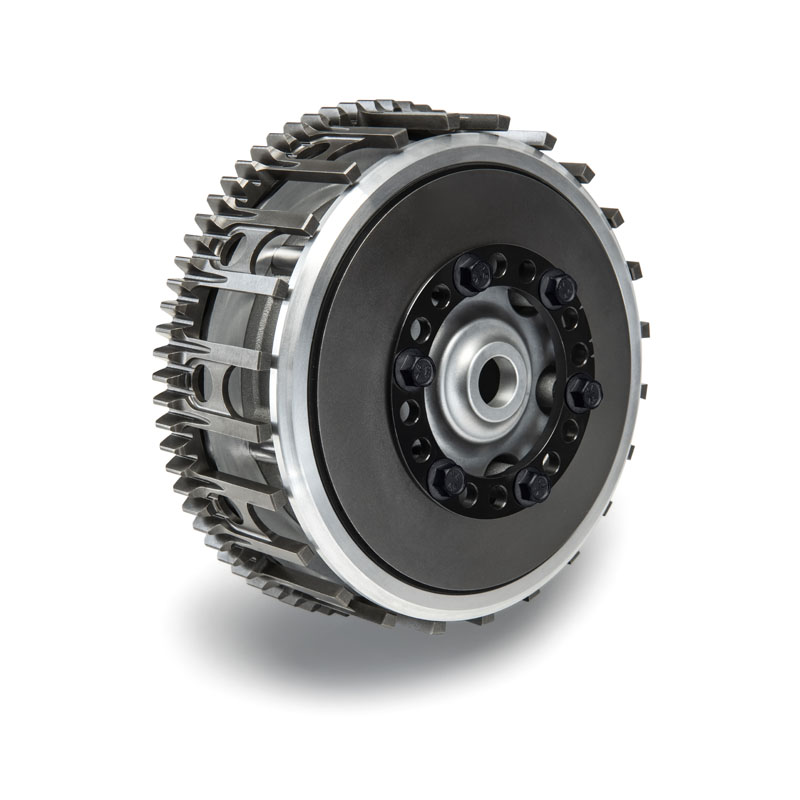
On the two-strokes, Beta keeps its adjustable power valve, one of the brand’s classic tools for tailoring power delivery to the rider’s preference. The diaphragm clutch also remains, adjustable in three intervention levels through a simple mechanical operation.
What really changes on the 2027 Beta X-Pro?
The 2027 X-Pro is not an all-new bike. And there is no need to sell it as one. Beta has chosen to keep refining a platform that already made sense within its range.
The main updates are focused in three areas: more electronics for the four-strokes, internal engine changes on the two-strokes and work on suspension and ergonomics to maintain that easy, versatile character.
The rest are detail improvements, some more visible — such as the LED headlight or new dashboard — and others more discreet, but all aimed at reliability, comfort and real-world use.
The 2027 Beta RR X-Pro range continues to play the “bike for almost everything” card: more serious than a friendly entry-level enduro, less demanding than a Race model and with enough arguments to convince both the amateur rider looking for confidence and the rider who wants to enter the odd race without fighting against a bike that is too stiff or too aggressive.
Beta has announced that the new X-Pro models will be available from dealers starting in June. However, the Italian brand has not yet confirmed official prices for the new range.
More information: www.betamotor.com